


AI for marketing that works alongside your team
AI for marketing puts artificial intelligence to work on the jobs that slow campaigns down. Asana AI Teammates are prebuilt AI agents, with some prebuilt for marketing, that work alongside your team inside real workflows. You see each change in Asana, and your team gets the final say.
Why AI hasn’t yet changed most marketing workflows
In our 2025 State of AI at Work report, we found that 70% of knowledge workers use AI weekly. AI for marketing operations is a different story. Most campaign work still runs the old way, with spreadsheets, status meetings, and approvals that sit in someone’s inbox.

AI tools create content but don’t move campaigns
Your AI writing tool spins up 10 ad variants before lunch. Then all ten wait a week in the review queue. Approvals and handoffs still run by hand, so the bottleneck just moved down the line.

Campaign coordination eats strategy time
On Monday, your launch lead pulls updates from five teams into one tracker. Half the updates change before lunch. Your best planner lost a whole morning to copy and paste.

Results analysis comes too late to act
Most teams dig into performance at the postmortem, where someone finally notices that paid social has underperformed for six straight weeks. The lesson is useful, but the budget is already spent. Those slowdowns are where AI for marketing should earn its keep — and where Asana AI Teammates go to work.
How Asana AI Teammates work for marketing teams
Here’s how AI for marketing looks when it works inside your campaigns.
AI agents for marketing, built into your campaigns
With AI Teammates, you can access prebuilt AI agents for marketing that work on the same tasks and projects as your team. You give each one a defined role, such as managing a launch timeline or writing briefs. It then follows the guidance you set, accessing any shared memory for past uses and context from the Work Graph®. Plus, you can customize AI Teammates with skills, giving them a packaged set of expertise to execute again and again.

Plan and coordinate campaigns
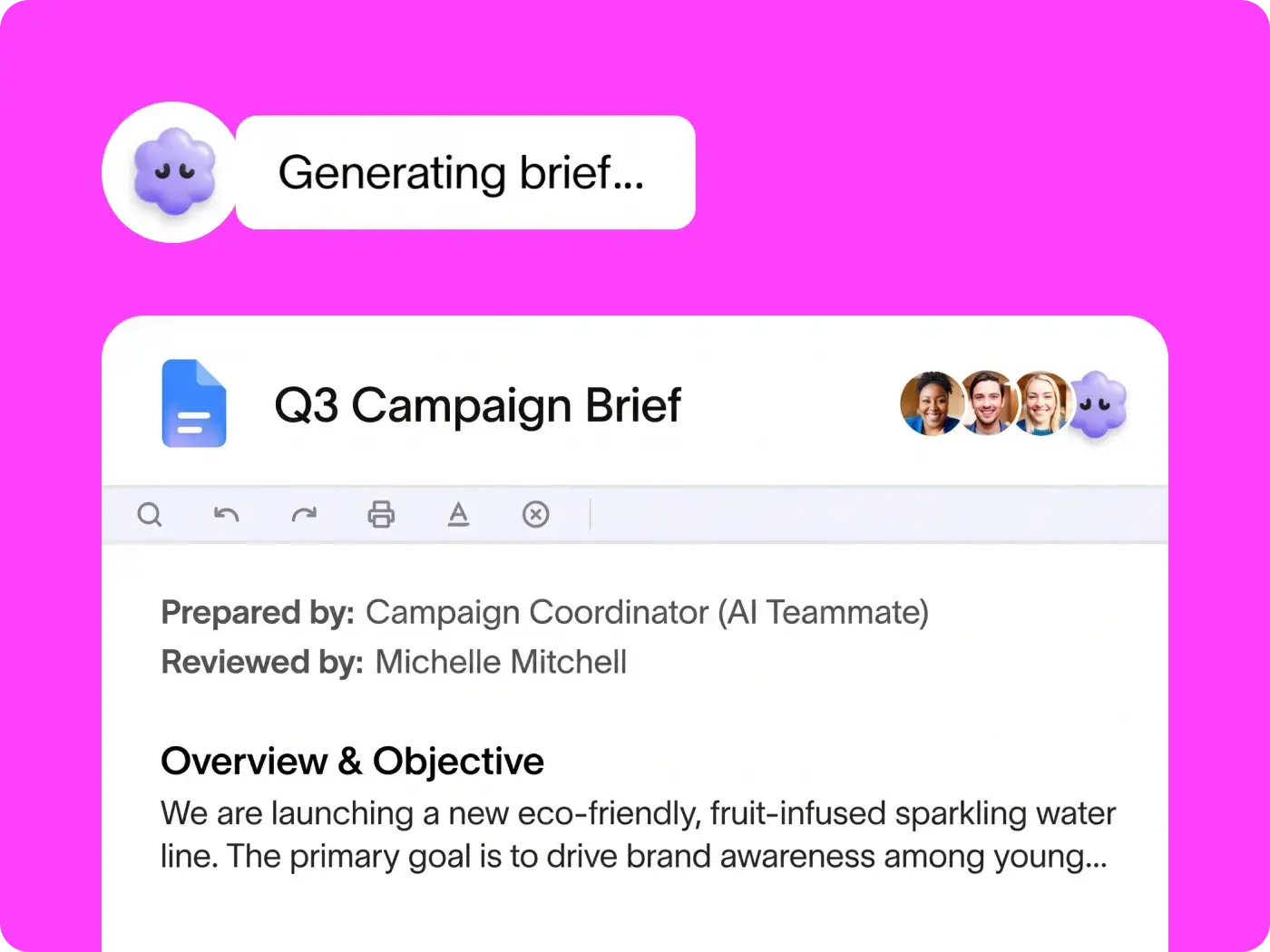
Put the Campaign Coordinator AI Teammate on the plan, and Monday’s status scramble shrinks. Ask it to confirm that every channel workstream is ready for launch, or rework the timeline if creative runs late. Share it with your team, and you get AI campaign management inside the plan and across all your projects.
For bigger launches, the Launch Coordinator AI Teammate runs the go/no-go check and flags anything that could block a team. Your launch lead sees every change and makes the final call before going live.

Turn strategy into briefs and content plans
Hand your new AI content strategist the topics approved in last week’s planning session, and it writes a brief for each one. Writers and editors shape each brief before work starts. Before publish day, ask the Content Strategist AI Teammate to confirm that everything on the schedule has an approval.
Once creative is ready, the Creative Ops Manager AI Teammate sends assets to legal and brand for review, then rolls all the visual feedback into one revision list.

Analyze results while there’s time to act
The Campaign Analyst AI Teammate checks how your campaign is performing while there’s still budget left to move. It flags programs that are pacing behind their goals and shows which channels drive the most pipeline, using data from your projects and connected apps like HubSpot.
You can shift spend weeks before the postmortem. Your team still decides where the money goes. When the campaign wraps, the Campaign Analyst AI Teammate drafts the post-campaign report for you to review and finish. And with shared memory, it learns from what happened this campaign and gets smarter for next time.

Built for marketing teams ready to work with AI
AI for marketing looks a little different for every seat on your team. Here’s how it fits the people who’ll use it most, alongside everything else Asana covers for marketing teams.


Enhance your campaign work
Leadership wants an AI plan, and so far your team has a few AI tools that sit outside your campaign plans. AI Teammates give you a concrete way to put AI on campaign work, with admin controls over who can create or change each one.
When your CEO asks what AI is doing for marketing, you can point to the jobs your AI Teammates took on, like the plan for last month’s product launch and the briefs for your fall campaign.. Finally, an AI plan you can show results for.
FedEx reached 9x faster speed-to-market by cutting manual coordination with AI Teammates
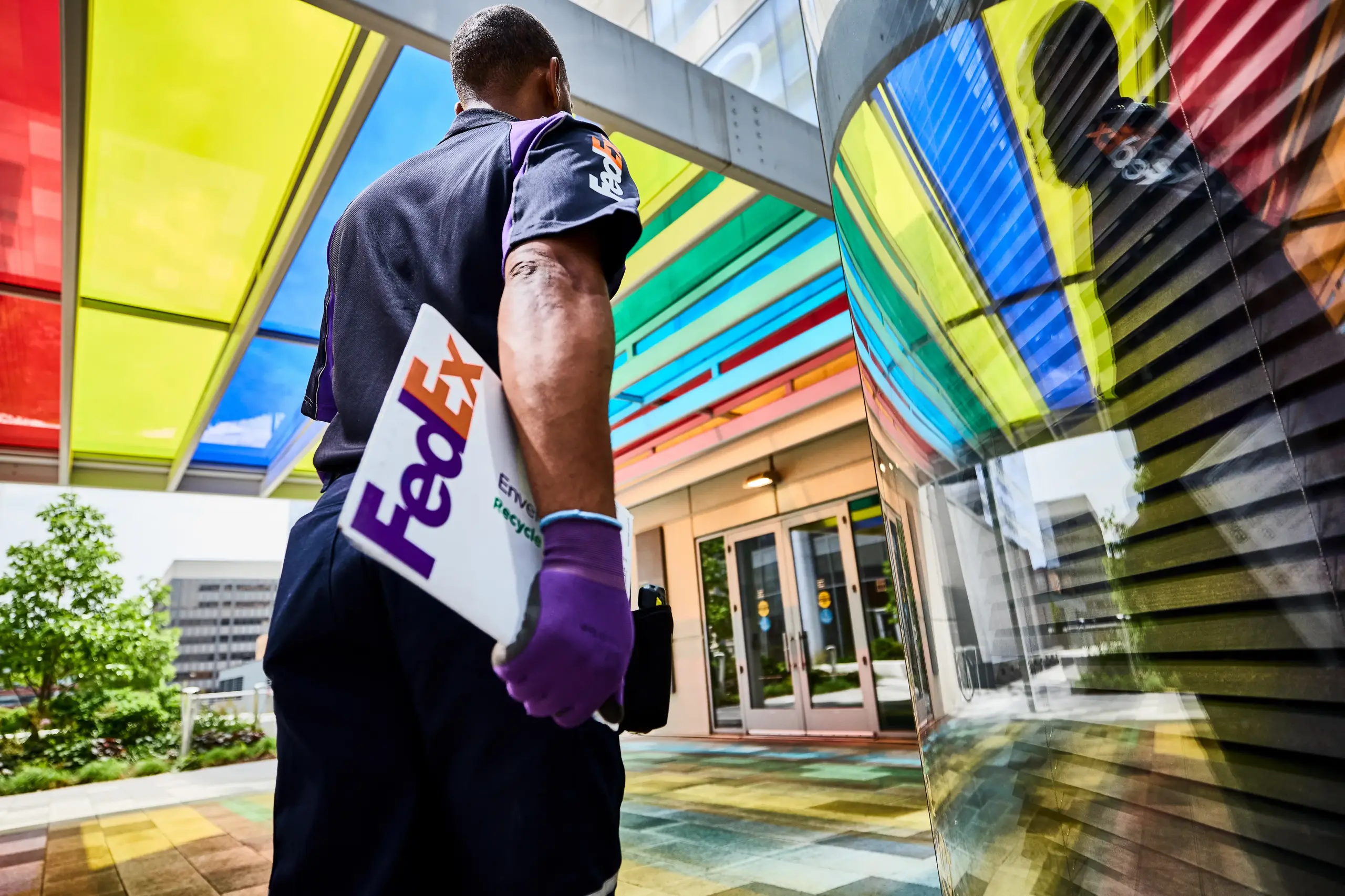
FedEx’s marketing team handles more than 25 global requests every week. Once a request is approved, AI Teammates in Asana turn the intake details into go-to-market plans and media briefs, and marketing strategy leads review every draft before it goes out. Intake time dropped from 90 minutes to 30 per request, and leads save about an hour per project each week on status updates.

The biggest game-changer is leveraging Asana AI Teammates to automatically generate critical business documents from information captured directly in the workflow. Instead of manually recreating briefs and presentations, we produce high-quality technical outputs in far less time, compressing planning timelines from weeks to days.Jessica Rogers
Digital Marketing Principal, FedEx
Put AI Teammates to work on your next campaign
Asana handles the coordination, and your team handles the ideas. Lean into AI for marketing today, and your first AI Teammate can pitch in before Friday.
Frequently asked questions about AI for marketing
Marketing teams use AI to research audiences, draft briefs and copy, coordinate campaign tasks, and read performance data faster. You save the most time when AI works inside the workflow your team already uses.
In Asana, you assign those jobs to AI Teammates in your campaign projects, and your team reviews their output.
AI agents for marketing are AI systems that take on defined marketing jobs, like coordinating a launch or analyzing performance, and hand work back for review.
Asana AI Teammates are AI agents that work inside your campaign projects. A Launch Coordinator, for example, runs your go/no-go check and flags anything that could block the launch.
The best AI tool for marketing depends on the job. Content generators help with first drafts of copy, and customer relationship management (CRM) agents work with customer data. To coordinate the campaign itself, work management AI like Asana AI Teammates fits best.
See more in our best AI marketing tools roundup.
Not quite. An AI assistant answers when you ask it something. An AI agent takes on an ongoing job and keeps working within the guardrails you set.
Asana AI Teammates work like agents. Give one a marketing role, such as Campaign Coordinator, and it picks up that work in your projects.
Most AI marketing tools work on one piece at a time. You paste in a prompt and get ad copy back, or you point a tool at customer records and it sorts them into segments.
AI Teammates work on the campaign itself in Asana. They can see the tasks and deadlines in your project, so a Content Strategist can write briefs for the topics your team already approved. Many teams use both.
You decide what each AI Teammate can access. Every one has its own identity in Asana, and permissions limit it to the projects you choose. An audit trail records what it did and when. Admins also control who can create or change AI Teammates, and your team reviews their work in your projects.
AI Teammates come with the Starter, Advanced, Enterprise, and Enterprise+ plans. Each plan includes a monthly allowance of AI Teammate requests, with more on higher tiers, and you can buy extra requests. The free Personal plan doesn’t include AI Teammates.
See our pricing page for current details.
No. We don’t use your data to train AI models, because your work belongs to you. We hold our AI partners to the same standard, so they can’t train on your data either, and they delete it after each request. Admins can also turn AI features on or off across the organization.
Read more in the Asana AI fact sheet.