Four ways AI Teammates keep campaigns moving from kickoff to launch
The strategy is set. The campaign is approved. The launch date is on the calendar. So why does the actual work still feel stuck?
The answer is often the layer in between: pulling together context, getting everyone on the same page, figuring out who owns what, tracking dependencies, and constantly checking whether things are still on track. None of this work is particularly glamorous, but it can eat up a surprising amount of time. It tends to show up in the form of endless Slack messages and last-minute scrambles.
Here are four common campaign and launch blockers, and how AI agents can slot in to take some of the coordination burden off the team.
Master the AI Revolution at Work
Learn how leading organizations are turning AI from a tool into a trusted teammate. Access our latest research report to discover five proven secrets of AI-mature organizations and transform your workplace.
Stop rebuilding campaign context from scratch after every kickoff
Let's say you leave a kickoff meeting feeling good. Everyone's aligned on the big idea, you've talked through the goals, and there are a million notes to work from.
But now someone has to turn all of that into an actual campaign.
So you're digging through the meeting notes to figure out what was actually decided. You're pulling in the strategy doc. You're looking for the latest messaging. You're chasing down feedback from the people who couldn't make the meeting. You're trying to remember whether that one thing was a hard requirement or just an idea someone threw out.
And before anyone has made a single asset, you've already spent days getting everyone on the same page.
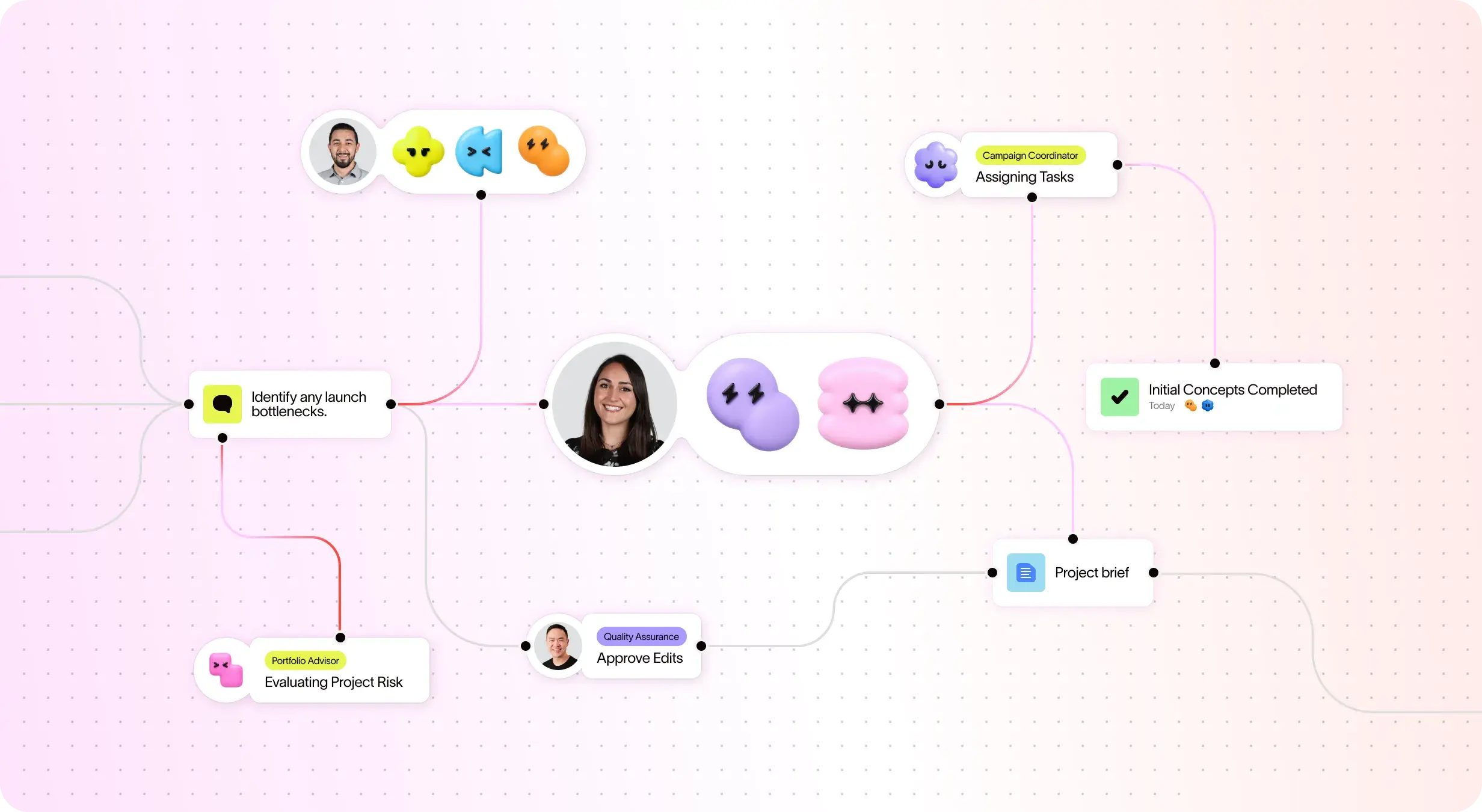
That's where the Campaign Coordinator AI Teammate comes in. It pulls the brief together from what was decided in the meeting, connects it to the latest strategy docs and messaging, and routes it to the right people, so the team starts executing from a shared plan, not a pile of notes.
Get a real-time readiness view before the launch date scramble starts.
Now you've got a launch date on the calendar, the big milestones are mapped out, and you're feeling pretty good. That is, until you start asking the questions that actually matter: Is the brand positioning finalized? Are the final design assets in? Are agencies prepped for thought leadership pieces? Did a sales enablement training get scheduled?
At some point, getting ready for a launch starts to feel like tracking down a hundred tiny details. You're checking in with different teams, hunting through project plans, and trying to figure out what's actually done versus what's supposed to be done.
And the closer you get to launch, the more expensive those unanswered questions become. A missing asset or unscheduled training might be easy to fix three weeks out. The same problem three days out can throw the whole plan into scramble mode.
The first challenge is knowing where the launch stands. You need a clear picture of what's complete, what's still outstanding, and which teams or deliverables aren't ready yet.
The Launch Coordinator agent helps build a milestone-driven view of launch readiness by working backward from the launch date and keeping track of the things that need to be in place before you can actually go live.
Keep campaign context connected as things change, without the manual chase.
The frustrating part is that none of this work feels particularly difficult. It's just constant.
Someone gives you new feedback, so you update the brief. A deadline moves, so you update the timeline. Creative changes direction, so you have to make sure everyone else knows. A stakeholder asks for a status update, and now you're pulling information from three different places to put together an answer.
And because the campaign keeps moving, the version of the plan you spent all that time putting together can be out of date almost immediately.
You're not really struggling to manage a campaign. You're spending a surprising amount of time keeping the campaign's context intact as it moves.
The Campaign Coordinator AI Teammate keeps the brief, timeline, and status connected to the live work, so when a deadline shifts or creative changes direction, the update flows through automatically. You're not rebuilding. You're moving.
All of this coordination is possible because of the living map of how your business actually operates, called the Asana Work Graph. This connected context means AI agents aren't starting from scratch, and can connect dependencies quickly so your team can focus on the work that matters most.
Surface launch dependencies before they become launch-day blockers.
Okay, so you have a handle on what's done and what's not. But that still doesn't mean you're in the clear.
Maybe design is waiting on a copy update before they can design the user flow, but that is dependent on the brand team deciding on final positioning. This positioning doc is also blocking the paid media team from finalizing ad designs to promote the campaign, risking they won't launch on time. The content team also can't engage agencies on thought-leadership content until the user flow is finalized. None of those things have technically missed a deadline yet, so everything still looks "on track," but all those dependencies piling up is dangerous.
The tricky part about launch risk is that it rarely announces itself as one big, obvious problem. It's usually a handful of small things quietly slipping in different places, and those things are connected. One delay creates another, which pushes another milestone, which suddenly leaves the team with two days to do something that needed two weeks.
The real challenge isn't just tracking the work. It's understanding how the work affects everything else. Which dependencies are becoming risky? What's on the critical path? And where does a small delay today have the potential to move the launch date?
You can also use the Launch Coordinator AI Teammate here to move from simply tracking milestones to flagging dependencies and potential bottlenecks before they turn into launch-day problems.
Replace coordination overhead with teams that focus on decisions, not status.
You still need the people. You still need the PMM shaping the strategy, the creative team doing the designing, and the launch lead making the final call on readiness.
What's different is the amount of work happening around those decisions.
Instead of manually rebuilding the brief every time new information comes in, the context can stay connected. Instead of checking five places to figure out what's going to affect the launch date, the relationships between milestones and dependencies can be surfaced as they change.
That's where AI agents become interesting. Not because they can "run your marketing for you," but because they can take on some of the constant coordination that makes the actual work harder than it needs to be.
The future of AI in marketing may not be about replacing the work. It may be about removing more of the friction between deciding what to do and actually getting it done.
Give your team back the time that coordination was taking.
Marketing teams aren't short on strategy. They're not short on ideas, either. What often slows them down is everything that has to happen between deciding what to do and actually getting it done.
Campaigns need context pulled together. Launches need dependencies surfaced. Teams need to know what's changed, what's stuck, and what needs attention before a small issue turns into a last-minute fire drill.
That's the layer AI agents have an opportunity to change. And they won't do it by replacing the people running the campaign or launch, but rather by taking some of the coordination burden off their plates.
The goal isn't to spend less time on marketing. It's to spend less time managing everything that gets in the way of doing it.